Average Reviews:

(More customer reviews)Are you looking to buy Illegal Alphabets and Adult Biliteracy: Latino Migrants Crossing the Linguistic Border? Here is the right place to find the great deals. we can offer discounts of up to 90% on Illegal Alphabets and Adult Biliteracy: Latino Migrants Crossing the Linguistic Border. Check out the link below:
>> Click Here to See Compare Prices and Get the Best Offers
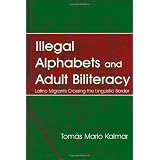
Illegal Alphabets and Adult Biliteracy: Latino Migrants Crossing the Linguistic Border ReviewI was impressed with this book not only because of Tomas Kalmar's clear mastery of the topic and knowledge of linguistics but also because of how flat out fun the book was to read: engaging and to the point, this book takes a serious look at what it's like to be a migrant worker in the US, struggling with language barriers and discrimination and highlights the strength of the Latino community. Because of the detailed linguistic content, I'm using it for a coursebook next semester. Because it's a fine read, I'm giving it as a gift to nonlinguist friends. BTW: if you happen to be English/Spanish bilingual, there are some very funny bits!Illegal Alphabets and Adult Biliteracy: Latino Migrants Crossing the Linguistic Border OverviewIllegal Alphabets and Adult Biliteracy--based on four years of intensive fieldwork in a small rural community in Southern Illinois--is a landmark work in the area of adult literacy, combining insights from linguistics, anthropology, literacy studies, and education in a culturally situated exploration of the language and literacy practices of migrant workers. As such, it is a substantive contribution to the linguistic study of indigenous literacies; to sociocultural approaches to language, learning, and literacy; and to ethnographic and critical approaches to education. The book begins with a true story about "illegal aliens" who, in the summer of 1980, in the town of Cobden, Illinois, decided to help each other write down English como de veras se oye--the way it really sounds. The focus is on why and how they did this, what they actually wrote down, and what happened to their texts. The narrative then shifts to how and why the strategies adult immigrants actually use in order to cope with English in the real world seem to have little in common with those used by students in publicly funded bilingual and ESL classrooms. The book concludes with a discussion of the ideal of a universal alphabet, about the utopian claim that anyone can use a canonical set of 26 letters to reduce to script any language, ever spoken by anyone, anywhere, at any time. This claim is so familiar that it is easy to overlook how much undocumented intellectual labor was invested over the centuries by those who successfully carried the alphabet across the border from one language to the next. From this undocumented labor, without which none of us would now be able to read, everyone profits. To make his story and his argument as accessible as possible, Kalmar steers clear of jargon and excessive technical terminology. At the same time, however, readers who are familiar with any of the current postmodern discourses on the social construction of symbolic forms will be able to bring such discourses to bear on what he has to say about the game, the discourse, and the scene of writing that constitute the focus of his theoretical analysis. When people today argue about "illegal aliens" in the United States, probably the last question on their minds is the one to which this book is devoted: how do "illegal aliens" use an alphabet they already know in order to chart the speech sounds of colloquial English? It is the author's hope that readers will interpret his story as a parable with serious political implications. Illegal Alphabets and Adult Biliteracy is a compelling, vitally relevant book for researchers, students, practitioners, and anyone else interested in language and literacy in social, cultural, and political contexts, including bilingual and ESL education, second-language acquisition and development, applied and sociolinguistics, multicultural education, educational anthropology, and qualitative research.Want to learn more information about Illegal Alphabets and Adult Biliteracy: Latino Migrants Crossing the Linguistic Border?
>> Click Here to See All Customer Reviews & Ratings Now

0 comments:
Post a Comment