Average Reviews:

(More customer reviews)Are you looking to buy Computational Auditory Scene Analysis: Principles, Algorithms, and Applications? Here is the right place to find the great deals. we can offer discounts of up to 90% on Computational Auditory Scene Analysis: Principles, Algorithms, and Applications. Check out the link below:
>> Click Here to See Compare Prices and Get the Best Offers
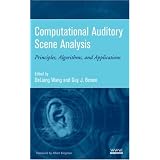
Computational Auditory Scene Analysis: Principles, Algorithms, and Applications ReviewHow do we manage to separate, in the everyday acoustic cacophony, the sound we hear from those we wish to ignore? We, humans, may be able to do it, but often inefficiently and with great effort. This is why work by groups of scientists and engineers, aimed at having the machine accomplish separation of sounds, especially speech sources, is becoming an important and ever-growing area of computer science. The book edited by DeLiang Wang and Guy Brown, two of the foremost experts of the area, is a notable achievement aimed at exposing intriguing aspects of computational signal separation with special emphasis on speech, written by leading figures of the field. This volume should be a required addition to the bookshelf of audio engineers, computer scientists, and applied mathematicians, but it is also likely to end up as a textbook to be used in graduate- and upper-level undergraduate courses in engineering departments.Computational Auditory Scene Analysis: Principles, Algorithms, and Applications OverviewHow can we engineer systems capable of "cocktail party" listening?
Human listeners are able to perceptually segregate one sound source from an acoustic mixture, such as a single voice from a mixture of other voices and music at a busy cocktail party. How can we engineer "machine listening" systems that achieve this perceptual feat?
Albert Bregman's book Auditory Scene Analysis, published in 1990, drew an analogy between the perception of auditory scenes and visual scenes, and described a coherent framework for understanding the perceptual organization of sound. His account has stimulated much interest in computational studies of hearing. Such studies are motivated in part by the demand for practical sound separation systems, which have many applications including noise-robust automatic speech recognition, hearing prostheses, and automatic music transcription. This emerging field has become known as computational auditory scene analysis (CASA).
Computational Auditory Scene Analysis: Principles, Algorithms, and Applications provides a comprehensive and coherent account of the state of the art in CASA, in terms of the underlying principles, the algorithms and system architectures that are employed, and the potential applications of this exciting new technology. With a Foreword by Bregman, its chapters are written by leading researchers and cover a wide range of topics including:
Estimation of multiple fundamental frequencies
Feature-based and model-based approaches to CASA
Sound separation based on spatial location
Processing for reverberant environments
Segregation of speech and musical signals
Automatic speech recognition in noisy environments
Neural and perceptual modeling of auditory organization
The text is written at a level that will be accessible to graduate students and researchers from related science and engineering disciplines. The extensive bibliography accompanying each chapter will also make this book a valuable reference source. A web site accompanying the text, http://www.casabook.org, features software tools and sound demonstrations.
Want to learn more information about Computational Auditory Scene Analysis: Principles, Algorithms, and Applications?
>> Click Here to See All Customer Reviews & Ratings Now

0 comments:
Post a Comment